Public trust in Malawi’s justice delivery system continues to decline amid growing perceptions of corruption, weak accountability and barriers to access, findings of a new survey show.
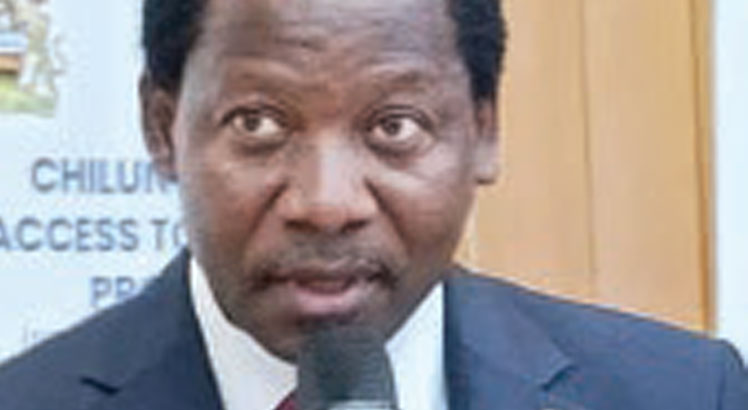
During the launch of the Justice and Accountability Survey 2025 in Lilongwe on Wednesday, Minister of Justice and Constitutional Affairs Charles Mhango said the findings show a steady erosion of confidence in the justice system since 2018 when the first survey was conducted. “The confidence levels and awareness levels have been dwindling over the years,” he said, conceding that the system is falling short of public expectations.
institutions. | Wycliffe Njiragoma
The survey, conducted by the National Statistical Office (NSO) with funding from the European Union (EU)-supported Chilungamo Programme, shows that national awareness of basic human rights dropped from 90.7 percent in 2018 to 85.7 percent in 2025, with sharper declines recorded in rural areas and in the Central and Southern regions.
It also reveals a widening gap between awareness and lived experience. More than half of respondents reported experiencing physical, verbal, psychological or sexual abuse in the two years preceding the survey, but only 29.4 percent reported the violations to authorities.
On rule of law, perceptions have worsened, with more than 70 percent of respondents saying public authorities rarely or never follow the law, while just 34.5 percent believe laws are applied equally. Corruption concerns remain high, with about 75 percent of respondents saying the formal justice system is prone to corruption.
Mhango acknowledged that most of the challenges highlighted are longstanding, saying he has begun engaging key institutions to understand persistent bottlenecks.
The survey further shows worsening access to formal justice. Although about 71 percent of Malawians say they understand the formal justice system, fewer than a quarter of those who took disputes to court had legal representation, largely due to distance, costs and informal or illegal fees. The survey also found that reliance on informal justice mechanisms has doubled to 32.2 percent in 2025 from 15.6 percent in 2018, mainly for land and family disputes.
EU Ambassador Daniel Aristi Gaztelumendi said the findings expose structural weaknesses and provide evidence for reform.
Malawi Law Society (MLS) chief executive officer Chrispin Ngunde said in an interview that the report confirms gaps that have persisted or worsened over time, particularly in rule of law, human rights protection and institutional performance.
The findings echo an MLS survey released in August this year, in which court users in Blantyre, Lilongwe and Mzuzu described the Judiciary’s complaints handling system as corrupt, inaccessible and ineffective. At the time, MLS president Davis Njobvu said the society would use the findings to push for speedy operationalisation of the Independent Complaints Commission of the Judiciary.